
The Holocaust is often associated with ‘industrialʼ killing in gas chambers. Commonly, however, killing was by bullets, even after gas chambers came into use. Of the Holocaustʼs six million victims, some 1.5 million were shot. All three cases heard by Adelaide courts concerned horrific examples of the ‘Holocaust by Bulletsʼ.
A first wave of killing in occupied Ukraine extended through the weeks following the German invasion of the Soviet Union. Most of the victims were Jewish men. In 1942 a second wave of killing took place. The genocidal character of the actions was evident in the targeting of all Jews, regardless of age or gender.
At the local level, the ‘Jewish actionsʼ were carried out by German Sicherheitspolizei units (that is, the Security Police or SiPo, a state police organisation), working seamlessly with members of the Sicherheitsdienst (SD, Security Service, a Nazi Party organisation).
The massive scale of the task they undertook required collaboration with the German Ordnungspolizei (Order Police), and with indigenous auxiliary police units, the Schutzmannschaften.
All branches of the police and security services involved in these actions followed orders stemming from Heinrich Himmler in Berlin.
While there were variations, the pattern was the same everywhere. Pits would be dug in advance. German forces would travel to the town or village. Police and local collaborators would help round up the Jews, conduct them to the pit and cordon off the area. Usually it was the travelling German contingent that did the shooting, but on occasion others participated.
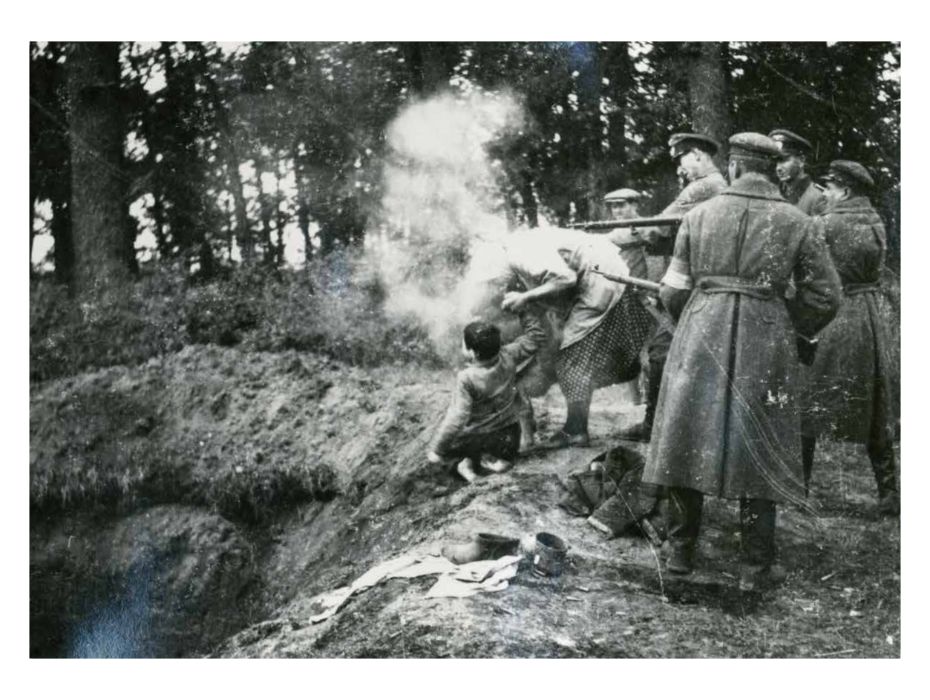
A Jewish family is shot at Miropol, Ukraine, October 13, 1941. (Security Services Archive, Historical Collection of the State Security Service (StB) Prague, archival no. H-770-3)
Holding rifles are a German and a Ukrainian; the Ukrainianʼs weapon is just a few inches from the womanʼs head. Another Ukrainian in the foreground has a rifle in his hands, while a further German is behind. In the background a civilian in a woollen cap looks on.
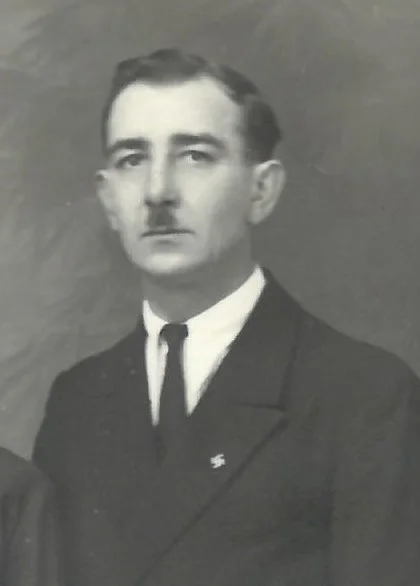
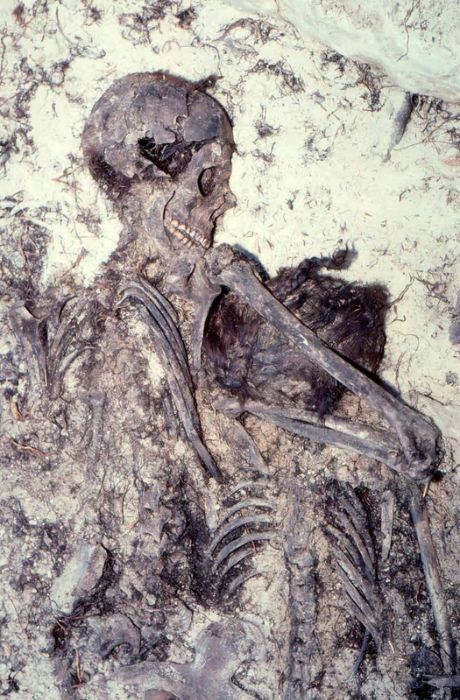
A killer. Adolf Petsch was a Nazi from the Sudetenland who was deeply complicit in the Holocaust by Bullets. West German investigations in the 1960s and a court case in the early 1970s showed that Petsch was a member of a Security Police (SiPo) unit based in Pinsk that carried out ‘Jewish actionsʼ in the Districts of Pinsk and Stolin in September 1942. Petsch admitted to taking turns with two other men to perform ‘neck shotsʼ from morning until afternoon, using a submachine gun on single-fire mode:
‘The shootings of mothers and infants were dealt with in such a way that it was explained to the mothers that they had to lay the child or children next to them, and if necessary hold onto them so that shooting could proceed without difficulty. The children were not shot in any other way. In no case was it established whether the victims were actually dead. That was not our job. It can well have been the case that some were still alive. I do not know who covered over the grave. If some were still alive then they will have been buried. […] At the end of the process my uniform was soiled with blood, and my hands too were covered with blood.’
Petsch was sentenced to fifteen years imprisonment.
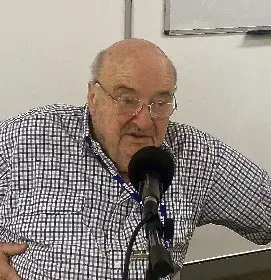
SIU chief historian Konrad Kwiet discusses the role of forest wardens such as Ivan Polyukhovichin the context of the German occupation of Ukraine.
Audio: Kwiet.3.Polyukhovich and the role of forest wardens.
Source: State Library of South Australia. Interview with Konrad Kwiet. Sound recording, Sydney,19 November 2023. Interviewer Peter Monteath. OH 1204/9.
Konrad Kwiet discusses how German authorities organised and implemented the killingcampaign in the Pinsk region of occupied Ukraine through the late summer and early autumn of1942.
Audio: Kwiet.4.Killers in the Pinsk region
Source:State Library of South Australia. Interview with Konrad Kwiet. Sound recording, Sydney,19 November 2023. Interviewer Peter Monteath. OH 1204/9.
Konrad Kwiet describes the ‘second wave’ or killings in Ukraine through the middle months of1942, emphasising their genocidal intent.
Audio: Kwiet.5.Second Wave killings
Source:State Library of South Australia. Interview with Konrad Kwiet. Sound recording, Sydney,19 November 2023. Interviewer Peter Monteath. OH 1204/9.
In testimony given to West German investigators and courts prior to his sentencing to 15 years’ imprisonment in 1973, Adolf Petsch spoke with remarkable candour about his involvement in the killing of Jews in the occupied Soviet Union. While it is not proven that Petsch participated in the shooting in Sernyky, the process he describes is the one followed in numerous instances through the Stolin and Pinsk areas in 1942.
Source: Torsten Schäfer “Jedenfalls habe ich auch mitgeschossen”: das NSG-Verfahren gegen Johann Josef Kuhr und andere ehemalige Angehörige des Polizeibataillons 306, der Polizeireiterabteilung 2 und der SD-Dienststelle von Pinsk beim Landgericht Frankfurt am Main 1962-1973 : eine textanalytische Fallstudie zur Mentalitätsgeschichte, Münster: LIT Verlag, 2007. p. 211. Translation Peter Monteath.
Before the shooting the Jews had to undress outside the pit. Men, women and children were shot […] In the course of the shootings there were naturally scenes, particularly when mothers and children or babies were to be shot. These cases were dealt with in such a way that first the children and then the mothers were shot. That was to prevent the children continuing to scream. […] It is correct that the victims had to lay themselves down in the pit with their faces to the ground before the shooting. Eventually those awaiting execution had to lay themselves on top of the dead. We ourselves never stood on the bodies during the shootings. When the pit was full, the victims were shot from the edge of the pit into the pit. The shootings of mothers and infants were dealt with in such a way that it was explained to the mothers that they had to lay the child or children next to them and if necessary hold onto them so that shooting could proceed without difficulty. The children were not shot in any other way. In no case was it established whether the victims were actually dead. That was not our job. It can well have been the case that some were still alive. I do not know who covered over the grave. If some were still alive then they will have been buried. […] At the end of the process my uniform was soiled with blood, and my hands too were covered with blood. That was the same for everyone who did the shooting. After each shooting the other shooters and I received a different uniform. Whether it was a washed or a new one, I don’t know.
The eminent historian Christopher R. Browning, at the time Professor of History at the Pacific Lutheran University in Tacoma, Washington, was engaged to prepare a report on historical evidence in relation to the Heinrich Wagner case. The document he provided is helpful for its historical overview of the development of genocidal policies and practices in the German-occupied territories of the Soviet Union. It examines the structure of German occupation and the respective roles of civilian administrators and security forces – including the indigenous police forces or Schutzmannschaften. Browning details the shift to the ‘second wave’ of killing in 1942, which is central to an understanding not only of the Wagner case but the Polyukhovich and Berezovsky cases also. An element that is of particular relevance to the Wagner case is his discussion of German policy in occupied Soviet territory toward Mischling children, that is, children of mixed Jewish and gentile backgrounds.
The report references a number of historical sources gathered together for the purpose of the legal proceedings.
Source: Christopher R. Browning, ‘Report of the Historical Evidence Concerning the Prosecution of Heinrich Wagner’, received 6 July 1993. From the collection of the defence team in the Heinrich Wagner case.
Adolf Petsch was a member of the German unit that undertook the killing of thousands of Jews at numerous locations in the districts of Pinsk and Stolin in September and October 1942. During investigations in the 1960s and a trial in the early 1970s he confessed to his role in the killings and was sentenced to a prison term of 15 years. It was apparent that Petsch took on the role of a Dauerschütze or permanent shooter, meaning that he commonly directly participated in the killing of Jews in the pits that had been dug in advance of the arrival of the German unit. There is no record of who comprised the German team that undertook the killings in Sernyky or the precise date of their arrival in the town, but it is highly likely that Petsch was a member of that unit, led by Wilhelm Rasp. Eyewitness testimony points to the Wednesday immediately prior to Rosh Hashanah being the crucial date, that is, 9 September.
The following comprises extracts relating specifically to Adolf Petsch from the doctoral thesis of Stephen Pallavicini dealing with the liquidation of Jews in Polesie.
Source: Stephen Pallavicini, ‘The Liquidation of the Jews of Polesie: 1941-1942’, doctoral thesis, Macquarie University, September 2001, pp. 184-87, 214.
Adolf Petsch is the most striking example of a Dauerschütze [permanent shooter]. Petsch was born on 31 January 1905 in Kornitz, Kreis Mährisch-Trübau in the Sudetenland.[1] After he finished his schooling he trained as a cooper, working for three years as an apprentice. From 1927 to 1929 he was a soldier in the 24th Infantry Regiment of the Czech Army. Following his discharge from the Army, he had a number of different jobs, finally trying his hand at agriculture, leasing 20-24 acres of land from which he conducted his own farm. He married in 1939, his son being born in 1942. In 1940 he was called to the Waffen-SS. Prior to joining the NSDAP in 1938, around the time of the Sudeten crisis, or as Petsch said in 1962, ‘until the liberation of the Sudetenland’, he had been a member of the Deutsche Turnerschaft and the Sudetendeutsche Partei. Following the Nazi seizure of the Sudetenland he joined the Allgemeine-SS. In his understanding he had ‘as it were regarded it as an honour to be taken into such a unit.’
Upon joining the Waffen-SS he trained as an infantry soldier and then as a non-commissioned officer (‘Unterführerlehrgang’). Fearing he would not pass, he discontinued the course and was posted to a Sonderkommando [Special Commando] at Leslau on the Wisla. One of the tasks of the Sonderkommando was to expel Poles from their homes when Volksdeutsche [ethnic Germans] from Bessarabia were resettled. In October 1940 he was discharged, only to be called to the Einsatzgruppen in January 1941.
Like other Einsatzgruppen members, Petsch trained at the police school at Bad Schmiedeberg. There he was instructed that he and his fellow trainees would follow the advancing troops in order to secure ‘order and security’. At the beginning of Operation ‘Barbarossa’ he was assigned to Einsatzgruppe C. He [acted] either as a marksman and guard at various Judenaktionen[Jew actions]. In Kiev, he shot approximately 150 – 200 men and up to 20 ‘so-called better Jews’. In Rovno in the autumn of 1941 he participated in a Judenaktion which lasted for 2 days. His superior officers had confidence in him and his killing abilities. He was taught that the Jews were shot because they were communists. However, in Rovno the pretence was dropped and he was told that they were shot because they were Jews.
Once the first wave of killings subsided the mobile killing units assumed a stationary role. Petsch was sent to the SD Aussenstelle [Security Service outpost] Pinsk,[2] where he initially assumed responsibility for office provisioning, including duties in the kitchen and garden, guard duty and telephone. From the outset of the ghetto liquidations Petsch gained a reputation as a Dauerschütze [permanent shooter], taking part in the ghetto liquidations of Janow, Kokrow, Stolin, Luniniec, Lachwa, Wysock and Gorodiszcze. On his admission he shot between 7000 and 9000 people with a shot to the neck.
Asked during his trail why he shot he replied:
Before the shootings I had an inner disgust. Among the comrades we talked about why the people were not allowed to live and be put to work. The constant theme before our actions was, ‘not again – why won’t this nonsense end.’ I did have reservations about killing innocent people, but on the other hand I thought, there is an order from the Führer that has to be obeyed. We had been chosen to kill the Jews and had to do it. I didn’t give any thought as to what the consequences of earnestly refusing to take part in the shooting actions might have been. A conversation I had with my wife during the war might give an indication of my attitude to my work at that time. I said to my wife, ‘If this goes well for us, then we can count ourselves lucky. The whole business weighs heavily on me psychologically, and I know that I will have to pay a price for it.’
Whatever doubts he may have had were put aside on the basis that ‘an order is an order’. At the same time he maintained that he did not know that ‘the annihilation of all Jews was on the government’s agenda.’ These self-serving statements must be balanced against others of his that he saw himself as a member of an elite who were chosen to murder the Jews: ‘We were chosen to kill the Jews and had to do it.’ He regarded the Jews as people who ‘in relation to the [German] population had accumulated a debt.’ The Jews, therefore, deserved to be summarily executed.
[…]
Following the Judenaktionen, Petsch remained in Pinsk until the German retreat in the summer of 1944. During the retreat he was transferred to the Wehrmacht. He was captured by the Soviet Army and remained a prisoner of war until 1948. Upon his release from prison he lived in Büdesheim, Kreis Friedberg and resumed his trade as a cooper.
The sentences imposed in the Magill Trial and Pinsk trial summarise the failure of the legal system. Magill was jailed for 5 years. Those that were prosecuted during the Pinsk trial received jail sentences of between 2 ½ years and 4 years. Petsch received a sentence of 15 years. As the Stuttgarter Zeitung stated, ‘7 hours for each murder’.[3]
[1] ZStL, II 204 AR-Z 393, Ghetto Vernichtung im Raum Pinsk, Statement Adolf Petsch, 20 August 1965 and 13 September 1962, 9842.
[2] ZStL, II 204 AR-Z 393, Ghetto Vernichtung im Raum Pinsk, Statement Adolf Petsch, 20 August 1965, 2799.
[3] Stuttgarter Zeitung, 7 February and 17 February 1973.
In testimony given to West German investigators and courts prior to his sentencing to 15 years’ imprisonment in 1973, Adolf Petsch spoke with remarkable candour about his involvement in the killing of Jews in the occupied Soviet Union. While it is not proven that Petsch participated in the shooting in Sernyky, the process he describes is the one followed in numerous instances through the Stolin and Pinsk areas in 1942.
Source: Torsten Schäfer “Jedenfalls habe ich auch mitgeschossen”: das NSG-Verfahren gegen Johann Josef Kuhr und andere ehemalige Angehörige des Polizeibataillons 306, der Polizeireiterabteilung 2 und der SD-Dienststelle von Pinsk beim Landgericht Frankfurt am Main 1962-1973 : eine textanalytische Fallstudie zur Mentalitätsgeschichte, Münster: LIT Verlag, 2007. p. 211. Translation Peter Monteath.
Before the shooting the Jews had to undress outside the pit. Men, women and children were shot […] In the course of the shootings there were naturally scenes, particularly when mothers and children or babies were to be shot. These cases were dealt with in such a way that first the children and then the mothers were shot. That was to prevent the children continuing to scream. […] It is correct that the victims had to lay themselves down in the pit with their faces to the ground before the shooting. Eventually those awaiting execution had to lay themselves on top of the dead. We ourselves never stood on the bodies during the shootings. When the pit was full, the victims were shot from the edge of the pit into the pit. The shootings of mothers and infants were dealt with in such a way that it was explained to the mothers that they had to lay the child or children next to them and if necessary hold onto them so that shooting could proceed without difficulty. The children were not shot in any other way. In no case was it established whether the victims were actually dead. That was not our job. It can well have been the case that some were still alive. I do not know who covered over the grave. If some were still alive then they will have been buried. […] At the end of the process my uniform was soiled with blood, and my hands too were covered with blood. That was the same for everyone who did the shooting. After each shooting the other shooters and I received a different uniform. Whether it was a washed or a new one, I don’t know.
Alexander Kruglov is the Scientific Advisor at the Ukrainian Institute for Holocaust Studies (Ukraine), a member of the Scientific Committee of Yahad–in Unum (France), and associate Editor of the “Russian Library of the Holocaust” (Russia). He provides this overview of the German structures and personnel that were responsible for the mass killing of Jews in Sernyky in September 1942.
Source: Alexander Kruglov, personal communication to Peter Monteath, 15 June 2026.
SERNIKI belonged to the ‘Gebiet Stolin’ and were located approximately 40 km west of Stolin. The Gebietskommissar in Stolin was SA-Standartenführer Arnold Dziembowski.
The German punitive forces in the ‘Gebiet Stolin’ included gendarmerie posts in Stolin, David-Gorodok and Vysotsk, as well as SD posts (established in mid-August 1942) in Stolin, David-Gorodok and Vysotsk.
The SD post in Stolin was headed by SS-Hauptsturmführer Willi LEISTER (interrogated after the war). Under his command were Staffel-Oberscharführer Georg Krautwurst (interrogated after the war), driver Albert Altmeyer, and interpreter-Volksdeutsche Eugen Wagner.
The SD post in Vysotsk (52 km south of Stolin) was headed by SS-Hauptscharführer Josef Niederer (interrogated after the war); his assistant was SS-Oberscharführer Erwin Öttel.
The SD post in David-Gorodok was headed by SS-Hauptscharführer Gustav Liebe; his assistant was SS-Hauptscharführer Hans Brendel (who was interrogated after the war).
From 12 August until mid-September 1942, the 1st Squadron of the Polizeireiterabteilung 2 was also stationed in Stolin. In September 1942, the acting squadron commander was Police Oberleutnant Heinz-Dieter Teltz (convicted after the war).
The SD posts were subordinate to the Security Police unit in Pinsk; the unit was headed by SS-Sturmscharführer Wilhelm RASP (who committed suicide after the war).
‘Jewish actions’ in ‘Gebiet Stolin’ were carried out by the Security Police unit in Pinsk with the participation of the relevant gendarmerie and SD posts, the Ukrainian auxiliary police, and the 1st Squadron of the Polizeireiterabteilung 2.
In particular, the ‘Jewish action’ in Serniki was carried out by a Security Police team from Pinsk. Apart from Rasp, the team generally included Adolf Petsch (sentenced to 15 years’ imprisonment after the war), Hans Dohmen, Raimund Patik (interrogated after the war), Ernst Balbach, and Hans Kotschi. The 1st Squadron of the Polizeireiterabteilung 2 most likely did not take part in this action; otherwise, many Jews would not have managed to escape from the ghetto.
Since the time of the Adelaide trials an organisation that has led the way in gathering evidence, including witness testimony, in relation to the ‘Holocaust by Bullets’ is Yahad-In Unum. You can learn more about its founder and president Father Patrick Desbois, and about the work of Yahad-In Unum in Ukraine and elsewhere, through its website:
This website includes photographs, personal accounts and historical material that some visitors may find confronting. It is not recommended for those under 13 years of age. Please explore at your own pace and take time to reflect before you leave this website.