
The Australian war crimes trials timeline follows the Adelaide proceedings from Ivan Polyukhovich’s arrest in January 1990 to the end of the case against Heinrich Wagner in December 1993. It begins with Polyukhovich’s appearance in the Adelaide Magistrates Court, where he faced charges relating to killings in Nazi-occupied Ukraine during World War II. Later that year, the High Court began hearing a challenge to the constitutional validity of the War Crimes Amendment Act. In August 1991, the High Court upheld the legislation, allowing the proceedings to continue. The following month, Mikolay Berezovsky and Heinrich Wagner appeared in the Adelaide Magistrates Court on separate war crimes charges. The timeline then traces the committal hearings, at which magistrates considered whether there was sufficient evidence for each case to go to trial. In 1992, Polyukhovich and Wagner were committed for trial, while the magistrate found insufficient evidence for the case against Berezovsky to proceed. Polyukhovich’s trial began before a South Australian Supreme Court jury in March 1993, and the jury acquitted him in May. In December, the Commonwealth Director of Public Prosecutions discontinued the case against Wagner because of his ill health. Following these events in order makes it easier to see where the three cases overlapped and how each took a different course. It also shows the practical effect of the High Court challenge, which delayed proceedings while the validity of the legislation was being decided. Within the Justice Delayed exhibition, the timeline gives readers a reference point for the sections on witnesses, prosecution and defence, and the trial itself. A reader following the witness accounts can return to the timeline to see when overseas witnesses began giving evidence in the Polyukhovich committal. The sequence connects individual hearings and decisions to the broader story of how the Adelaide courts dealt with allegations dating back nearly fifty years.
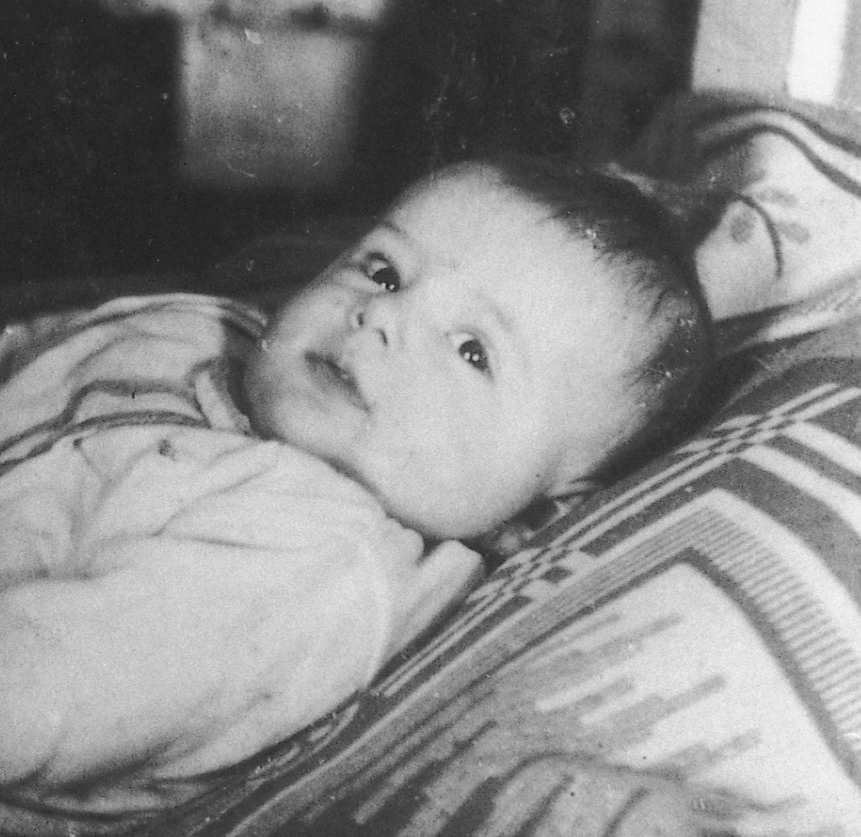
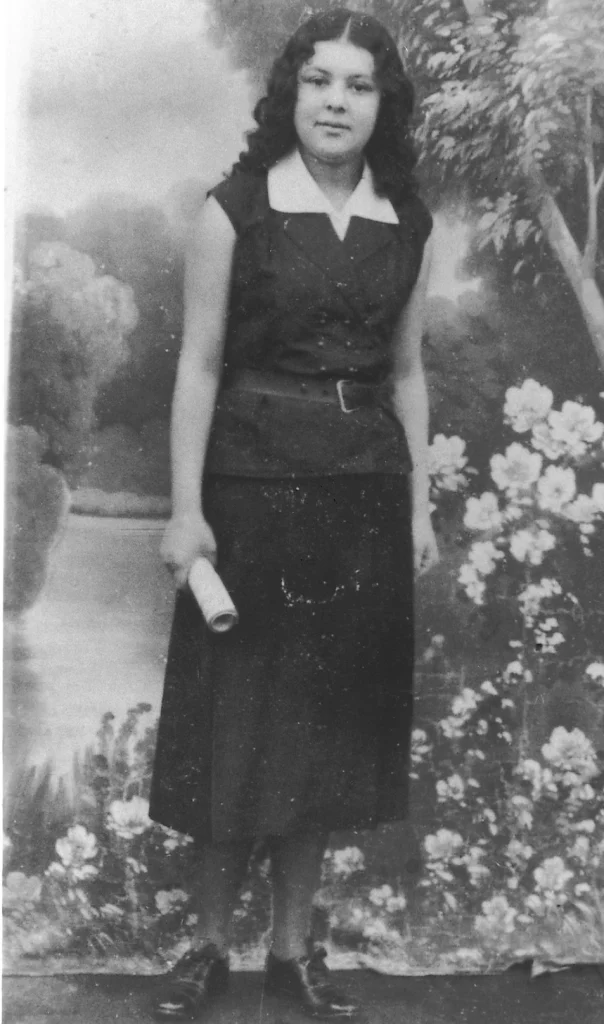
Most of the charges considered in the Polyukhovich committal did not survive through to the trial. Among them were the alleged murders of Tsalykha Kaz, her daughter Luba Botvinik and her grand-daughter Tzila Botvinik. The allegation was that Polyukhovich had murdered them at a time and location separate from the mass killing of Sernykyʼs Jews in September 1942. Inconsistencies in the evidence of an event that had occurred half a century earlier persuaded magistrate Kelvyn Prescott that on this count there was ‘no case to answerʼ.
Courtroom testimony
Of the three cases that went to committals in Adelaide, only one proceeded to a full trial before the Supreme Court, and that was in the Polyukhovich case. Of the counts that were heard at the Polyukhovich committal, only two proceeded ultimately to trial.
The courtroom evidence in relation to one of the counts in the Polyukhovich case gives some insight into the challenges facing the prosecution in convincing Magistrate Kelvyn Prescott that after so much time there was a case to answer. In many cases witnesses had been very young at the time of the alleged offences. Their memories could appear unreliable. There were at times inconsistencies between the evidence they gave in court and evidence they had given earlier, whether in written form or in the form of videotestimony.
Ukrainian witness Ykaterina Bogatko gave evidence that was crucial to the second count in the Polyulhovich case, namely that between 1 June and 30 September 1942 Polyukhovich (or Ivanechko) had murdered a woman known as Tsalykha, her daughter and her grandchild. These killings were allegedly at a separate time from the pit killing and allegedly took place near the village of Alexandrovo, not far from Sernyky.
Below is an extract from the examination of the witness, carried out by Grant Niemann for the prosecution. Further below is an extract from the cross-examination by Michael David for the defence.
This count did not proceed to the jury trial in the Supreme Court.
Source: Collection of papers held by the defence in relation to the Polyukhovich committal hearing, volume 3.
Examination
[…]
Q.
Did you know one day in summer of 1942 when you and your sister were in the field and your sister was harvesting buckwheat?
A.
Yes.
Q.
Approximately how old were you at that time?
A.
Nine, tenth.
Q.
Did your sister have a baby?
A.
Did have, yes.
Q.
Was that child in the field with you at the time?
A.
In the field.
Q.
When you were in the field what did you see?
A.
We saw as Ivanechko was leading – as Ivanechko led two – led two and they were carrying a child in arms, a girl, a little girl.
Q.
Was the two people he was leading and the child in front of Ivanechko?
A.
In front.
Q.
Did Ivanechko have with him at that time any weapon?
A.
He had an automatic – the weapon was upon his shoulder and he carried it thus.
Q.
In which way, if any, was he pointing it?
A.
Straight.
Q.
How far in front of him were these people?
A.
As far as is to the television set.
WITNESS INDICATES ABOUT TWO METRES
Q.
Where were you when you saw this?
A.
In the field.
Q.
How far were you from him when you saw this?
A.
About 50 metres, possibly closer, such was the distance.
Q.
Was there anything between you and Ivanechko so as to impede your view?
A.
There were small bushes.
Q.
Could you see him past these bushes?
A.
We could because they were sparse.
Q.
Do you know approximately how old the oldest woman was?
A.
I know I did not see which one was the older one. They were walking side-by-side with a child in arms.
Q.
Did the older woman appear to be much older than the younger woman or were they about the same age?
A.
I could not see their faces as he was leading them.
Q.
Where did you first see him come from?
A.
Out of the woods, out of the woods.
Q.
How far were the woods from where you were in the field?
A.
About 300 metres, less, 200 metres.
Q.
You could see the woods clearly, could you, clearly from where you were?
A.
Could see
Q.
Did you see where he took them?
A.
I saw.
Q.
Where did he take them?
A.
He led them by us about 50 metres and he led them towards a mound called – that place was called as there lived a German called Lobshtan.
Q.
How far was he from you when he stopped?
A.
About 50 metres.
Q.
When he took them to that place that you have described as Lobshtan how far was he from you approximately at that time?
A.
About 50 metres.
Q.
What happened when he arrived at that place?
A.
They undressed to underclothing.
Q.
Could you hear him speak?
A.
I heard but I could not distinguish what he was talking.
Q.
Were the women making any noise?
A.
They were crying.
Q.
When they undressed to their underclothes what happened then?
A.
They were holding the baby and he shot at the back of them.
Q.
After he shot at the back of them –
A.
They fell down.
Q.
What of the baby, what can you remember of the baby?
A.
The child rolled towards the feed and cried very much.
Q.
What happened then?
A.
That child was waving its hands and crying.
Q.
At that time that you saw this happen what were your sister and you doing?
A.
We are standing together and looking.
Q.
Was there anything in front of you at this time?
A.
Sparse bushes.
Q.
What was the country like or the land like between where you were standing and where you saw Ivanechko shoot these two women?
A.
It was even.
Q.
After you saw this happen what did you do?
A.
We stood together with the sister. The sister said, ‘Do not leave, children, in that we will be shot.’
Q.
So, did you stay still?
A.
Yes.
Q.
For how long did you stay still?
A.
Up until the time that he departed.
Q.
How long after the shooting approximately did he depart?
A.
About half an hour.
Q.
In what direction did he go?
A.
Towards his home.
Q.
After he had left that area did you see anything else?
A.
After he went home a woman came, his sister or mother, I do not know, took the clothing and slung it across her shoulder and went away.
Q.
Do you say that it was either his sister or mother?
A.
Yes.
Q.
But that you don’t know which one?
A.
I do not know.
Q.
After they collected these clothes in which direction did they head?
A.
Into the same direction as he had went – or had gone.
Q.
After the woman had left what then did you do?
A.
We went with the sister there where the killed were.
Q.
You went with your sister?
A.
Yes.
Q.
When you went there what did you see?
A.
They lay with faces into the ground.
Q.
What of the child? What did you see of the child?
A.
And the child was lying down rolled over at their feet thus holding its little arms up.a
Q.
Was the child moving?
A.
No. It was not alive. Everybody was covered in blood.
Q.
Were either of the women moving?
A.
No.
Q.
When you looked at the women, did you know who they were?
A.
Sister said, ‘these are of Tsalikha’.
[…]
Cross examination. The cross-examination of the witness was undertaken by Michael David KC for the defence. The defence sought to cast doubt on the ability of the witness to identify the accused Ivan Polyukhovich (or ‘Ivanechko’) as the killer of Tsalykha Kaz, her daughter and grand-daughter.
Q.
Do you identify the man here, as the person you saw kill Tsalikha and the other two?
A.
This.
Q.
Do you say this man you identified here, was the person who killed Tsalikha?
A.
Yes.
Q.
You are positive of this, are you?
A.
Yes. He is remembered unto me from my childhood.
Q.
From what you saw?
A.
Yes.
Q.
You last saw this man when you were ten years old?
A.
Yes. Up until the time as I die, I will know him and I will know him in the earth.
Q.
When you were 10 years old? You are positive that is the man, who you have never seen since?
A.
Yes.
[…]
Q.
Did your sister tell you it was Ivanechko who killed these people?
A.
Sister said, and I recollected him.
Q.
Did your sister say, it was Ivanechko who killed those people?
A.
She said.
Q.
That is why you say it was Ivanechko?
A.
I also recollected myself. I saw him.
Q.
But you couldn’t tell whether it was his sister or his mother, who picked up the clothes?
A.
I cannot say. I was only little. How could I?
[…]
Q.
Can you remember what Ivanechko was wearing, when you say he shot Tsalikha?
A.
He was in that sort of attire, as I am saying.
Q.
If you told Mr Reid [ie Bob Reid of the SIU, in Rivne in 1989] you couldn’t remember what he was wearing, that would not be accurate?
A.
Those clothes I remember, as I am saying.
Q.
Did you tell that to Mr Reid, when he asked you about clothes?
A.
I told him.
Q.
What did you tell Mr Reid?
A.
That clothing I remember, as you have said.
Q.
Namely, that you couldn’t remember what he was wearing?
A.
Not that I remember. I simply saw him. I simply saw the colour of the attire.
ADJOURNED 2.13 P.M.
RESUMING 2.40 P.M.
Q.
I am going to have played a video, which I suggest is a conversation between you and Mr Reid, through an interpreter, in December 1989. I would like you to watch it and listen to it very carefully.
VIDEO PLAYED at 2.40 P.M.
Q.
Was that you?
A.
Yes.
Q.
Did you say those things?
A.
I said.
Q.
Does that refresh your memory as to what you said to Mr Reid?
A.
I remember.
Q.
And just to clarify it, is it about his clothes, when you are saying, ‘I can’t say definitively. I can’t quite remember’?
A.
Yes.
Q.
Do you remember saying ‘I only remember he had submachine gun, but not his clothes’?
A.
The clothes were at a distance, whence can I remember that?
Q.
But you now say you can remember?
A.
The same colour as I remember it was.
Q.
Why did you say to Mr Reid you could not remember?
A.
I can remember. I am saying the same thing now. The same colour, but I do not remember what it was like.
Q.
When Mr Reid asked you the question, that you saw on the video, ‘Can you tell us what Ivanechko was wearing at this time’?
A.
I cannot say. He was clad the way, as I am saying.
Q.
You could not say then. Is that what you are telling us?
A.
Then, I could not, and now I cannot exactly.
[…]
This website includes photographs, personal accounts and historical material that some visitors may find confronting. It is not recommended for those under 13 years of age. Please explore at your own pace and take time to reflect before you leave this website.