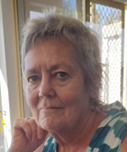
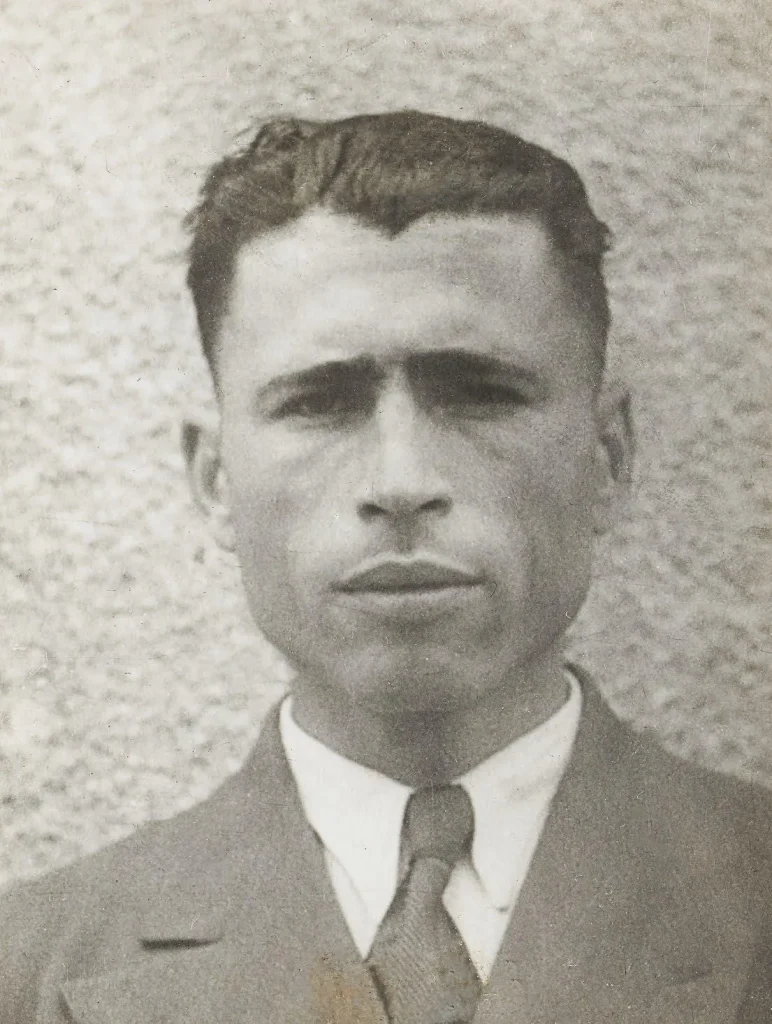
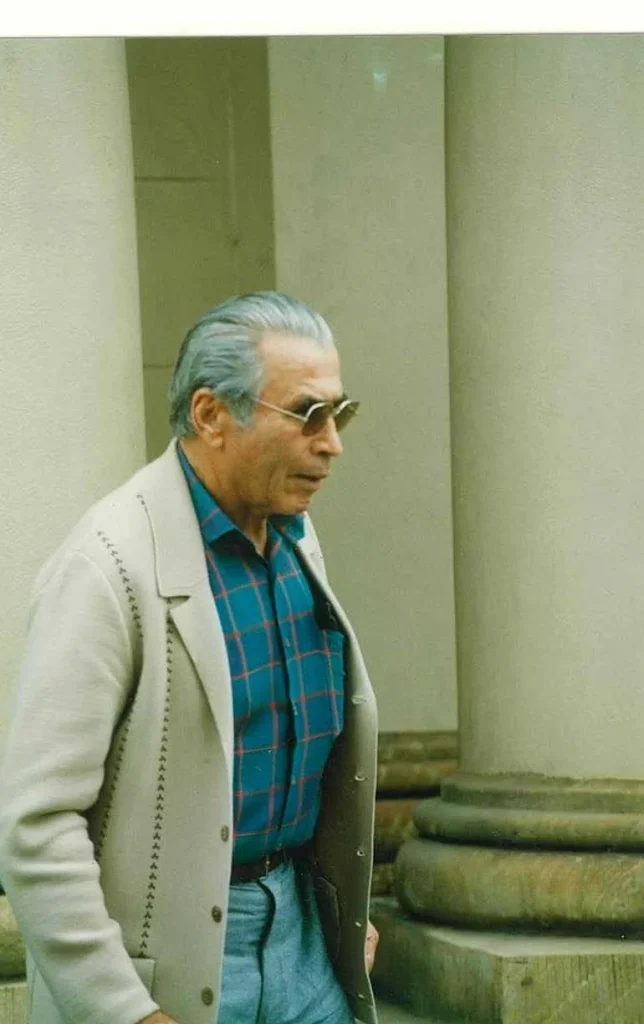
‘Polyukhovichʼ remains a very common surname in the village of Sernyky. For that reason, Ivan Timofeyovich Polyukhovich, born there in 1916, went by the street-name of ‘Ivanechkoʼ, or ‘Little Ivanʼ.
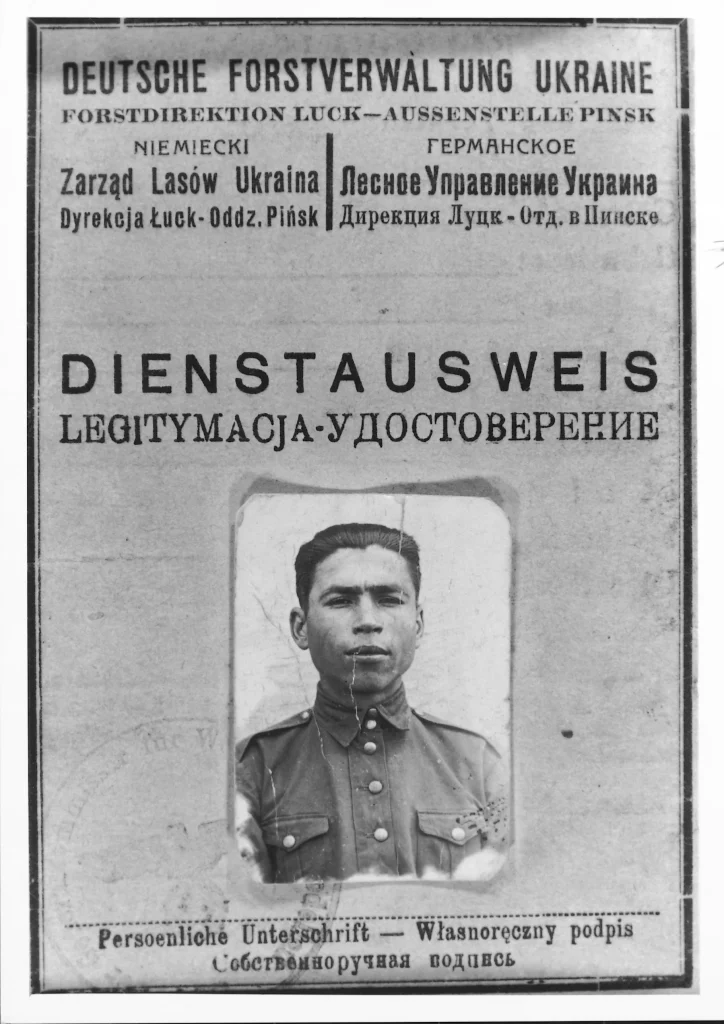
‘Ivaneckhkoʼ became a forest warden and remained one when the district was occupied by Soviet forces in 1939 and after the German invasion in 1941.
With the approach of the Red Army later in the war, Polyukhovich, his second wife Maria and his two step-daughters were sent to Germany.
In 1949 the Polyukhovichs migrated to Australia as Displaced Persons and settled in Adelaide.
On 26 December 1986 the Adelaide newspaper The Advertiser received a telex from Soviet Ukraine containing allegations that Polyukhovich had committed multiple murders.
Journalists sought out Polyukhovich. He confirmed he was the man referred to in the telex as ‘Ivanechkoʼ but denied the war crimes allegations.
The episode prompted Mark Aarons to visit the Sernyky area of Ukraine in early 1987 to gather evidence, as Soviet authorities continued their own investigations. In 1989 the SIU sent a team there. When an initial probe of a suspected mass grave site near Sernyky found human remains, the Commonwealth Director of Public Prosecutions believed there was enough evidence to issue an arrest warrant.
On 25 January 1990 Polyukhovich was arrested at his Adelaide home and appeared the next morning – Australia Day – in the Adelaide Magistrates Court on charges of war crimes.

Deputy director and then director of the Special Investigations Unit Graham Blewitt discussesthe events leading to the arrest of Ivan Polyukhovich in Adelaide in January 1990.
Audio: Blewitt.1.Events leading to Polyukhovich arrest
Source: State Library of South Australia. Interview with Graham Blewitt. Sound recording,Sydney, 21 November 2023. Interviewer: Peter Monteath. OH 1204/5.
After one failed attempt, Polyukhovich was arrested at his Seaton home on 25 January 1990 andtaken to Federal Police Headquarters in Adelaide for interview, as told here by SIU investigatorBob Reid.
Audio: Reid.3.Polyukhovich arrest and interview
Source: State Library of South Australia. Interview with Bob Reid. Sound recording, 16September 2023. Interviewer: Peter Monteath. OH 1204/2.
On the evening before his committal hearing Polyukhovich attempted suicide, though it was notimmediately clear that his gunshot wounds were self-inflicted. SIU investigator Bob Reidrecounts his reaction to the news that a badly injured Polyukhovich had been found near hisSeaton home.
Audio: Reid.2.Polyukhovich suicide attempt
Source: State Library of South Australia. Interview with Bob Reid. Sound recording, 16September 2023. Interviewer: Peter Monteath. OH 1204/2.
Defence lawyers Lindy Powell and Gabby Brown on Ivan Polyukhovich
Audio: Powell and Brown.10.Polyukhovich
Source: State Library of South Australia. Interview with Lindy Powell and Gabby Brown. Soundrecording, Adelaide, 7 March 2025. Interview by Peter Monteath. OH1204/11.
Polyukhovich had worked as a forest warden (in German: Heger) before the German occupation of Ukraine and continued in that role. He was attached to a branch of the German forest service in Pinsk, now in Belarus but at that time part of the Reichskommissariat Ukraine, north of Sernyky.
Because Polyukhovich was such a common name in Sernyky, he went by the street name ‘Ivanechko’, which could be translated as ‘Little Ivan’ or ‘Johnny’.
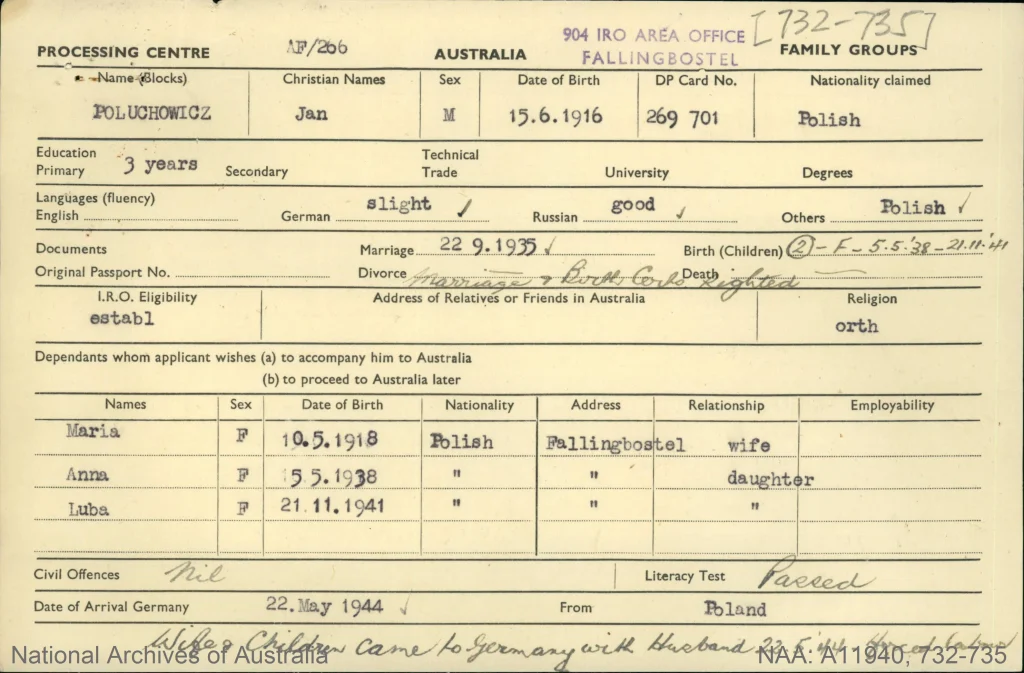
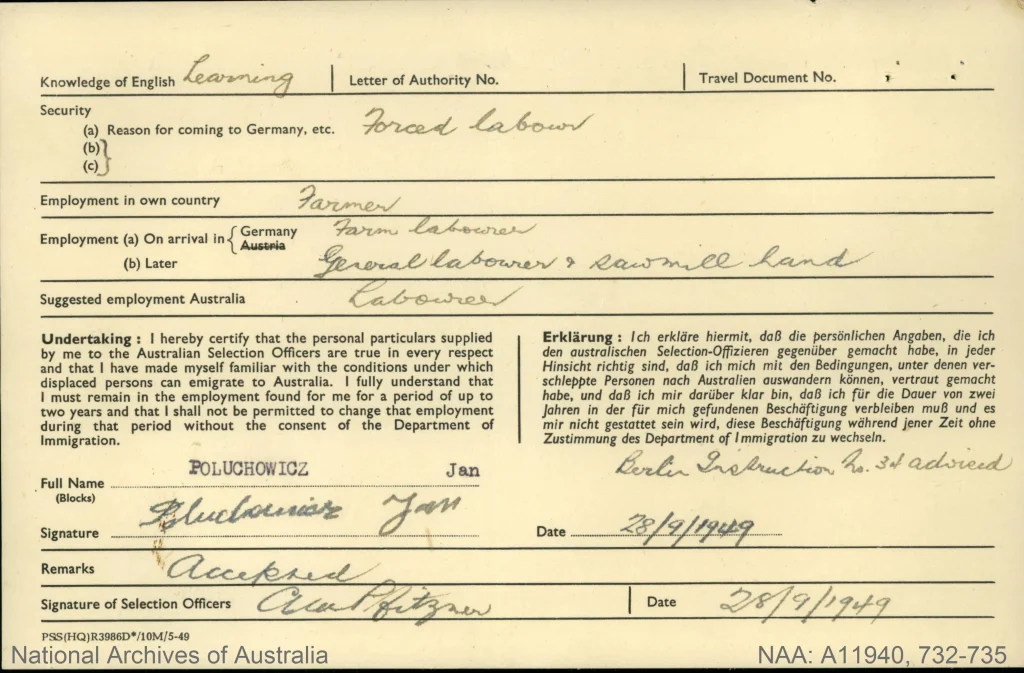
These are the first two pages of Polyukhovich’s Migration Selection Documents for Displaced Persons who travelled to Australia per Castelbianco departing Naples 29 November 1949. His nationality is listed as Polish, and he signs his name with a Polish spelling. At the time of his birth in 1916, Sernyky was part of the Russian Empire. When he grew up between the wars, it was in Polish territory.
He is recorded as being married with two daughters. He had long separated from the woman he married in 1935, Maria Polyukhovich. By coincidence, the woman who was now his de facto wife was also called Maria Polyukhovich (Polyukhovich was and remains a very common surname in Sernyky). She had two children with her husband, who had become a prisoner of war. Both daughters migrated to Australia with their mother and step-father.
Polyukhovich’s occupation in his home country is given as ‘farmer’. Civil offences are listed as ‘Nil’. Polyukhovich is recorded as having arrived in Germany in May 1944 for forced labour. The selection officer at the processing centre in Fallingbostel Displaced Persons Camp has recorded, ‘Accepted’, a decision which is understandable on the basis of the information provided by Polyukhovich.
Polyukhovich has thus signed a form attesting to the accuracy of the personal particulars provided. In the United States and Canada, suspected war criminals were deported on the basis that they had provided inaccurate information to immigration authorities.
In Australia, if a person was not an Australian citizen and it could be established that they had obtained entry by false representation, they would be subject to deportation regardless of period of residence. However, in respect of persons who had acquired citizenship, deportation was not available.
Ivan Polyukhovich, like Mikolay Berezovsky and Heinrich Wagner, had acquired Australian citizenship.
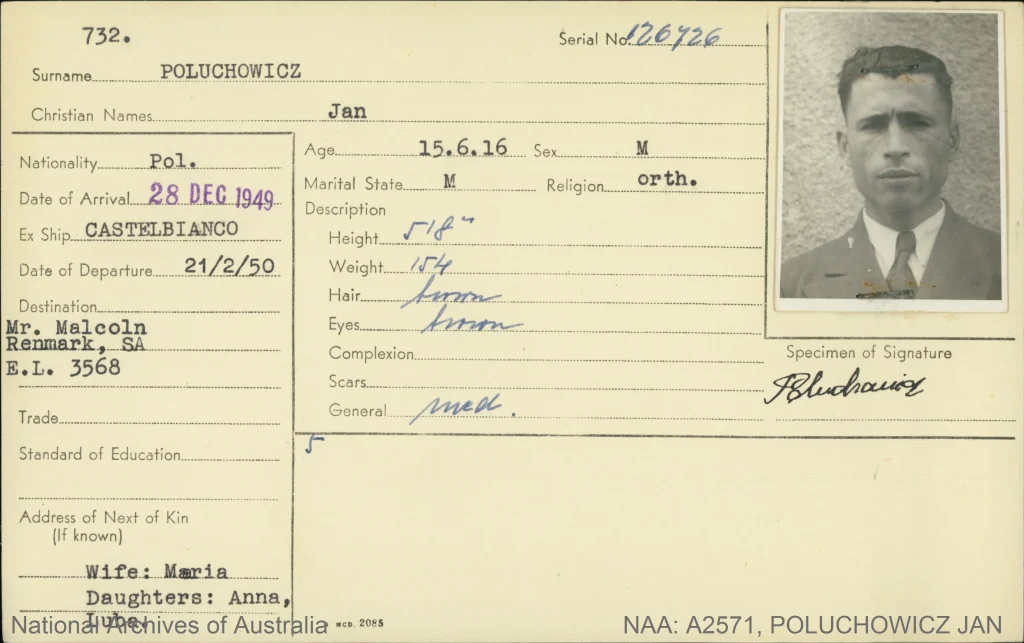
Pages and photo from Polyukhovich’s name index card in the registration of migrants at the Migrant Reception and Training Centre in Bonegilla, Victoria. When Polyukhovich arrived in Australia he continued to use the Polish spelling of his name ‘Jan Poluchowicz’. From early 1950 he worked in Renmark in South Australia’s Riverland before settling in Adelaide.
This website includes photographs, personal accounts and historical material that some visitors may find confronting. It is not recommended for those under 13 years of age. Please explore at your own pace and take time to reflect before you leave this website.