The Adelaide war crimes legal teams faced a difficult task when allegations dating back to World War II came before Australian courts. The prosecution had to connect specific defendants to crimes committed decades earlier in Nazi-occupied Ukraine. The defence examined whether the evidence could reliably establish each accused person’s involvement. In the case against Ivan Polyukhovich, lead prosecutor Greg James worked with Grant Niemann and members of the Special Investigations Unit to bring together historical records, forensic findings and witness testimony. Many witnesses travelled from overseas and gave evidence through interpreters. Defence lawyers Michael David and Lindy Powell represented Polyukhovich and also acted for Mikolay Berezovsky and Heinrich Wagner during their committal hearings. The defence accepted that the Holocaust had occurred and that Jewish communities had been subjected to mass killings. Its questions centred on what the witnesses could reliably recall and whether their accounts identified the accused. The distinction mattered because evidence of a mass killing could establish what happened at a particular place while leaving questions about the actions of an individual. Before a case could go to trial, a magistrate had to decide at a committal hearing whether there was sufficient evidence for it to proceed. Polyukhovich was the only one of the three defendants to reach trial, where a jury acquitted him in 1993. The Justice Delayed exhibition puts the lawyers’ work in context by showing how an investigation spanning several countries became a series of hearings in Adelaide. It also helps explain why a photograph, an archival document or a witness’s recollection could carry different weight depending on the question before the court. Following the work of the prosecution and defence gives readers a closer view of how the legal teams examined evidence and why the outcomes depended on what could be proved about each defendant in court.
Ivan Polyukhovich attempted suicide on 29 July 1990, the eve of his committal hearing. His recovery, and then a High Court challenge to the War Crimes legislation, delayed proceedings.
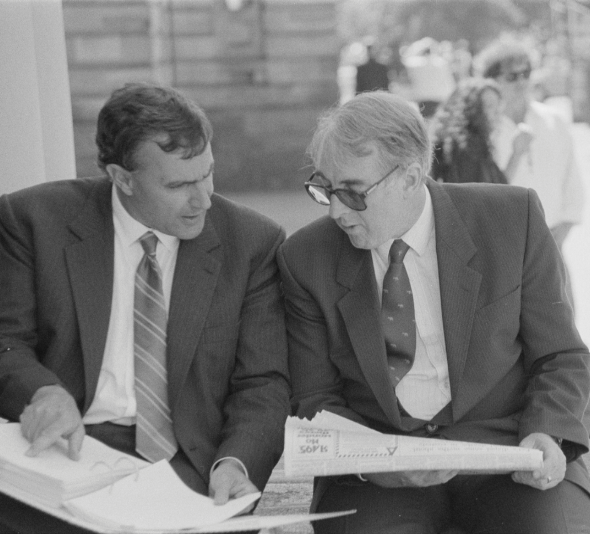
When the committal finally commenced on 28 October 1991, the key courtroom figure in the prosecution team was prominent Sydney lawyer Greg James. Supporting him, both inside and outside the courtroom, was Grant Niemann, the Adelaide-based Commonwealth Deputy Director of Public Prosecutions, and a team including members of the SIU.
The prosecution faced a huge task in presenting wide-ranging evidence to the courts. It needed to arrange the timely appearance of witnesses, most from overseas and in need of interpreters. The greatest challenge, however, was to prosecute crimes that had occurred half a century earlier.
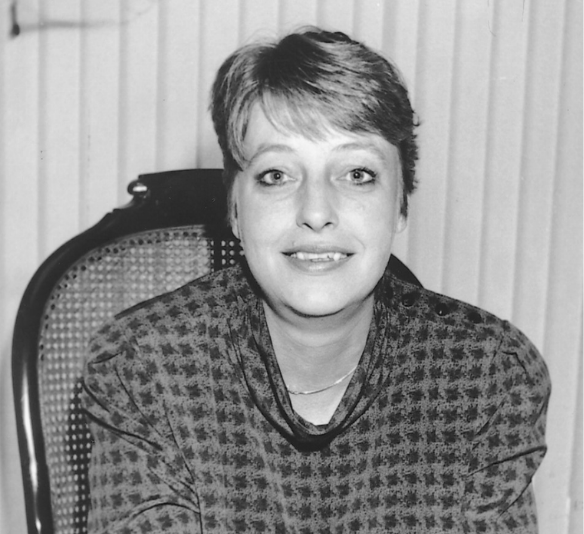
By the time the Polyukhovich committal began, Polyukhovichʼs instructing solicitor David Stokes had engaged Adelaide lawyers Michael David and Lindy Powell for the defence. With their extended team, they also defended Berezovsky and Wagner in their committals.