
Heinrich Wagner was a Volksdeutscher, an ‘ethnic Germanʼ, born in the village of Springfeld in southern Ukraine. Springfeld had been founded as a German colony in Tsarist Russia.
During the war Wagner worked for the German police in the nearby administrative centre of Ustynivka. He emigrated to Australia in 1950 as a Displaced Person under the name ‘Andrej Woijtenkoʼ.
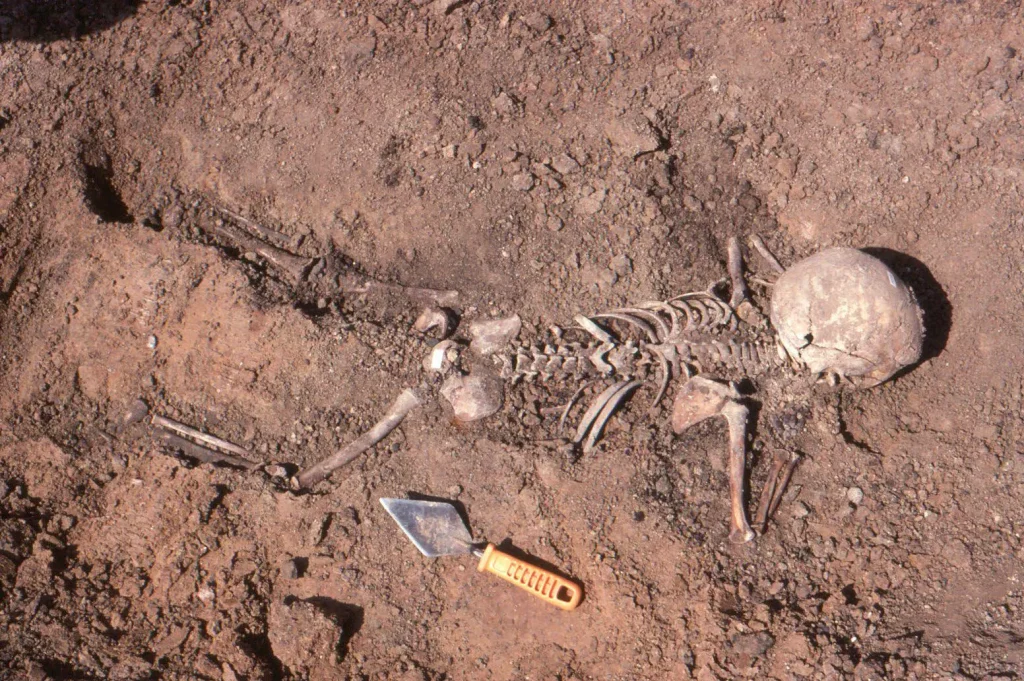
Photograph from the mass grave near Ustynivka. (Richard Wright)
The first skeleton Richard Wrightʼs team found was that of a lone child. The disposition of the body suggests that the child was thrown into the grave and then shot.
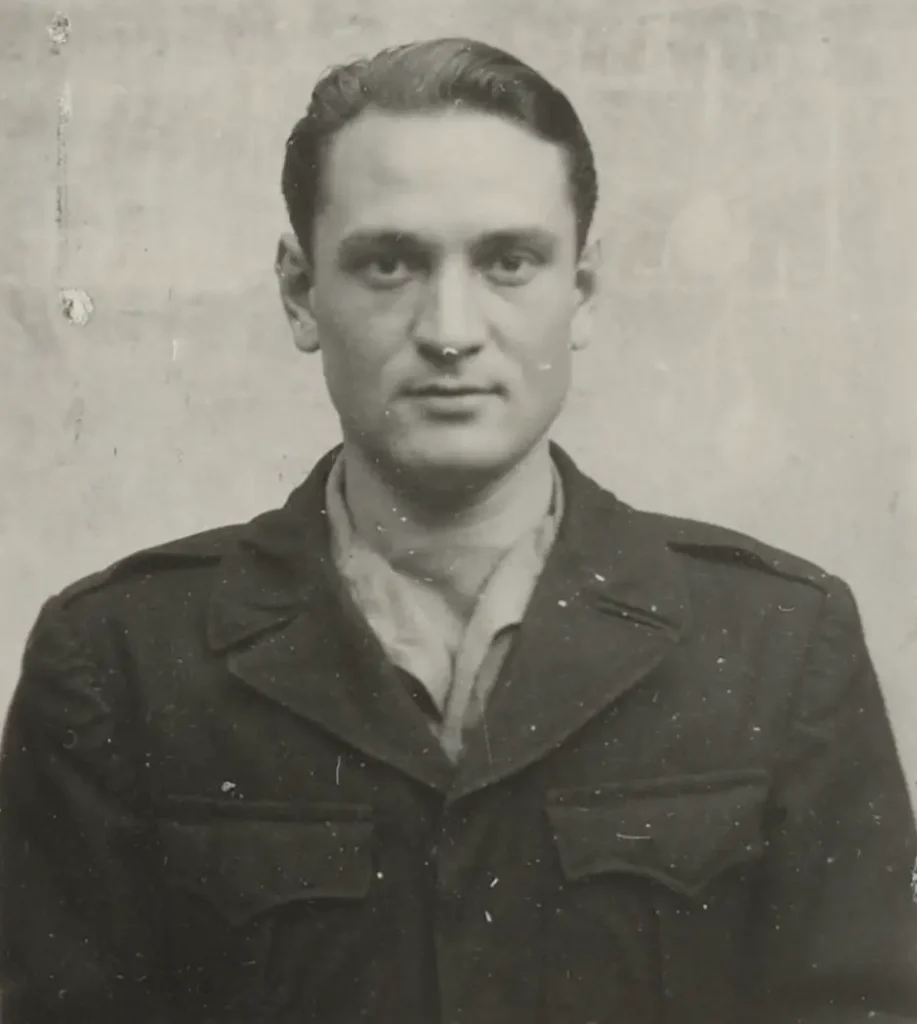
Heinrich Wagner at the time of his entry to Australia under the name Andrej Woijtenko. (National Archives of Australia: D4878, WOIJTENKO A)
Australian investigations suggested Wagner was complicit in the 1942 murders of 104 adult Jews from the village of Izrailevka (later renamed Berezuvatka). Evidence indicated that on the same day and in the same location Wagner participated directly in the murder of nineteen so-called Mischling children, that is, children of mixed Jewish and gentile parentage.
The bodies of the children and, below them, the adults were exhumed in mid-1991 by Richard Wright and his team.
Wagner was arrested on 5 September 1991 and appeared before the Adelaide Magistrates Court charged with three counts of war crimes.
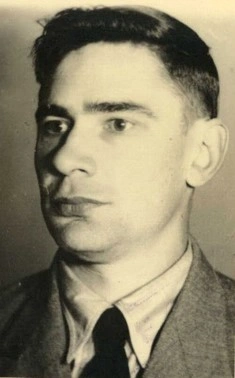
Mikolay Berezovsky (or Mikolaj Berezowski, or other variations) at the time of his emigration to Australia. (National Archives of Australia: A11520, 703-704 BEREZOWSKI Milolaj DOB 13 October 1913; BEREZOWSKA Wiera DOB 3 April 1918)
The SIU first became aware of Mikolay Berezovsky in June 1990. Investigations included interviews with witnesses, archival research and, in July 1991, forensic work undertaken by Richard Wrightʼs team near the Ukrainian town of Hnivan (or Gnivan). That work revealed a mass grave with the skeletal remains of 102 people. The SIUʼs investigations suggested that Berezovsky was head of police in Hnivan in the Vinnytsia region and that he had collaborated with the German occupation regime. It was alleged that he had helped escort Jews to a pit where they were shot in summer 1942. Berezovsky and wife Vera had arrived in Australia in March 1949 as Displaced Persons. He was interviewed at his Adelaide home by SIU investigators on 12 June 1991, arrested on 5 September 1991 and charged with one count of war crimes.
Lindy Powell and Gabby Brown discuss how the defence team came to represent Berezovskyand Wagner as well as Polyukhovich.
Audio: Powell and Brown.1. Berezovsky Wagner
Source: State Library of South Australia. Interview with Lindy Powell and Gabby Brown. Soundrecording, Adelaide, 7 March 2025. Interview by Peter Monteath. OH1204/11.
Deputy director and then director of the Special Investigations Unit Graham Blewitt discussesthe strength of the case against Heinrich Wagner.
Audio: Blewitt.8.On the Wagner case
Source: State Library of South Australia. Interview with Graham Blewitt. Sound recording,Sydney, 21 November 2023. Interviewer: Peter Monteath. OH 1204/5.
SIU investigator John Ralston on being assigned the Wagner case.
Audio: Ralston.1.Assigned Wagner case
Source: State Library of South Australia. Interview with John Ralston. Sound recording, Sydney,16 June 2024. Interviewer Peter Monteath. OH 1204/8.
SIU investigator John Ralston on the range of evidence in the Wagner case.
Audio: Ralston.8.Evidence in Wagner case
Source: State Library of South Australia. Interview with John Ralston. Sound recording, Sydney,16 June 2024. Interviewer Peter Monteath. OH 1204/8.
SIU investigator John Ralston on the allegations in the Wagner case.
Audio: Ralston.9.Wagner allegations
Source: State Library of South Australia. Interview with John Ralston. Sound recording, Sydney,16 June 2024. Interviewer Peter Monteath. OH 1204/8.
SIU investigator John Ralston on the forensic evidence in the Wagner case.
Audio: Ralston.10.Wagner forensic evidence
Source: State Library of South Australia. Interview with John Ralston. Sound recording, Sydney,16 June 2024. Interviewer Peter Monteath. OH 1204/8.
SIU investigator Ralston on the finding in the Wagner committal that there was ‘a case toanswer’.
Audio: Ralston.12.Wagner committal finding
Source: State Library of South Australia. Interview with John Ralston. Sound recording, Sydney,16 June 2024. Interviewer Peter Monteath. OH 1204/8.
The finding in the Wagner committal was that there was ‘a case to answer’, but the trial did notproceed because of a negative health assessment of Wagner. Lindy Powell and Gabby Brownrecall that assessment.
Audio: Powell and Brown.13.Wagner medical assessment
Source: State Library of South Australia. Interview with Lindy Powell and Gabby Brown. Soundrecording, Adelaide, 7 March 2025. Interview by Peter Monteath. OH1204/11.
Lindy Powell and Gabby Brown on the termination of the Wagner case.
Audio: Powell and Brown.14.Wagner termination
Source: State Library of South Australia. Interview with Lindy Powell and Gabby Brown. Soundrecording, Adelaide, 7 March 2025. Interview by Peter Monteath. OH1204/11.
SIU investigator John Ralston responds to the termination of the Wagner case.
Audio: Ralston.13.Wagner termination.
Source: State Library of South Australia. Interview with John Ralston. Sound recording, Sydney,16 June 2024. Interviewer Peter Monteath. OH 1204/8.
SIU interpreter Tanya Ryvchin discusses her work on the Berezovsky case in the Vinnytsia regionof Ukraine, including her collaborative work with local interpreters.
Audio: Ryvchin.1.On Berezovsky Case
Source: State Library of South Australia. Interview with Tanya Ryvchin. Sound recording, 27September 2024. Interviewer: Peter Monteath. OH 1204/16.
Deputy director and then director of the Special Investigations Unit Graham Blewitt explainshow it was that a form of alibi was provided for alleged war criminal Mikolay Berezovsky at hiscommittal.
Audio: Blewitt.10.on the Berezovsky alibi
Source: State Library of South Australia. Interview with Graham Blewitt. Sound recording,Sydney, 21 November 2023. Interviewer: Peter Monteath. OH 1204/5.
Some twelve months after completing the work in Sernyky in July 1990, Richard Wright went on to participate with Australian teams in the investigation of mass grave sites for the Wagner and then the Berezovsky case.
Some twelve months after completing the work in Sernyky in July 1990, Richard Wright went on to participate with Australian teams in the investigation of mass grave sites for the Wagner and then the Berezovsky case.
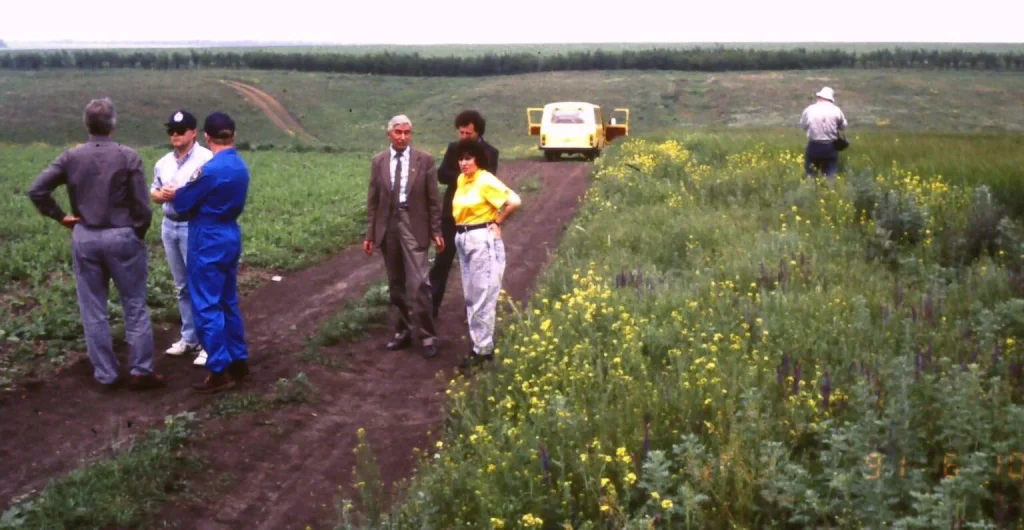
The site of the mass grave in Ustynivka in the Henrich Wagner investigation – John Ralston second from left in white shirt and black cap. SIU interpreter Mira Grinberg in the yellow blouse.
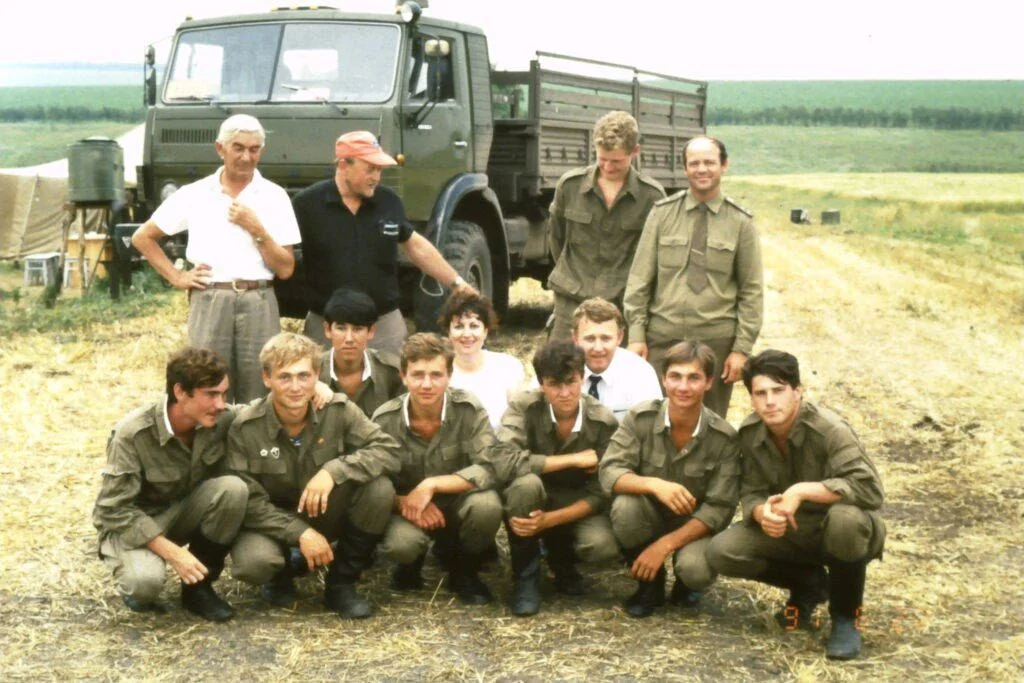
SIU investigator John Ralston (crouching in the second row – in the white shirt and tie) next to SIU interpreter Mira Grinberg with members of the Soviet Army, who assisted in the mass grave exhumation in the case involving Henrich Wagner. Stas Kostetsky, the local Ukrainian interpreter from Rivne, in the black shirt and orange cap, is standing in the back row.
The images below are supplied by Richard Wright; texts are the results of discussions with him.
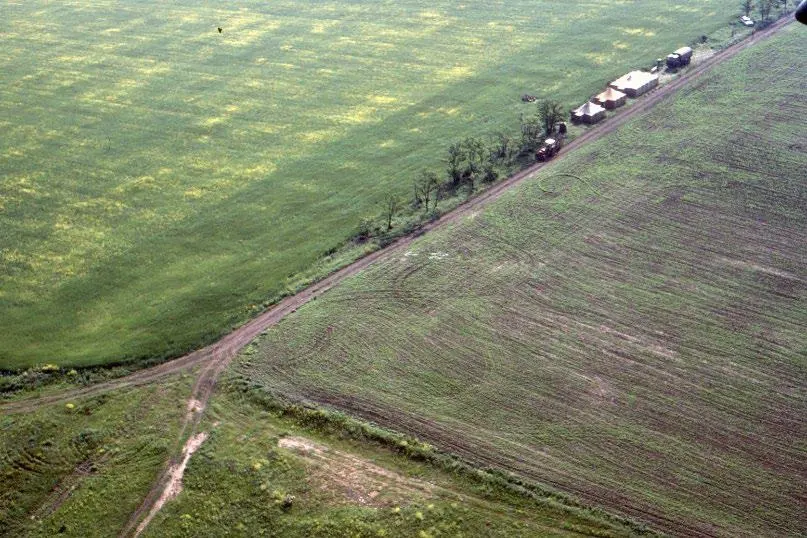
The general area around an as yet invisible mass grave on a road connecting Ustynivka with Berezuvatka. Eye-witnesses claimed there were murdered Jews in the bottom of the grave, and, after the grave had been partly filled, there were murdered Mischling children, that is, children of mixed Jewish and gentile parentage.
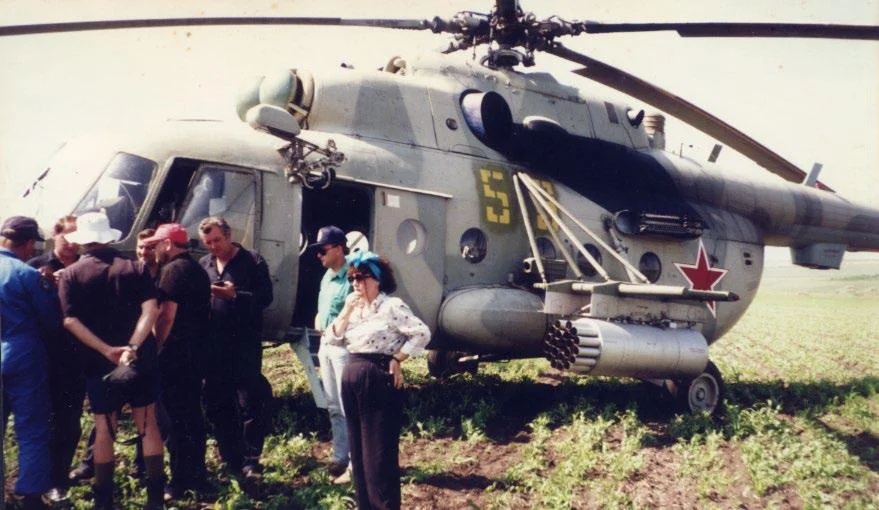
As the grave was invisible at the surface, the Australians were presented with a military helicopter, recently returned from the war in Afghanistan. Sonia and Richard Wright were strapped into the cabin, with ropes around their waists, by an open door. They could see no outline of a grave, even with the advantage of high altitude.
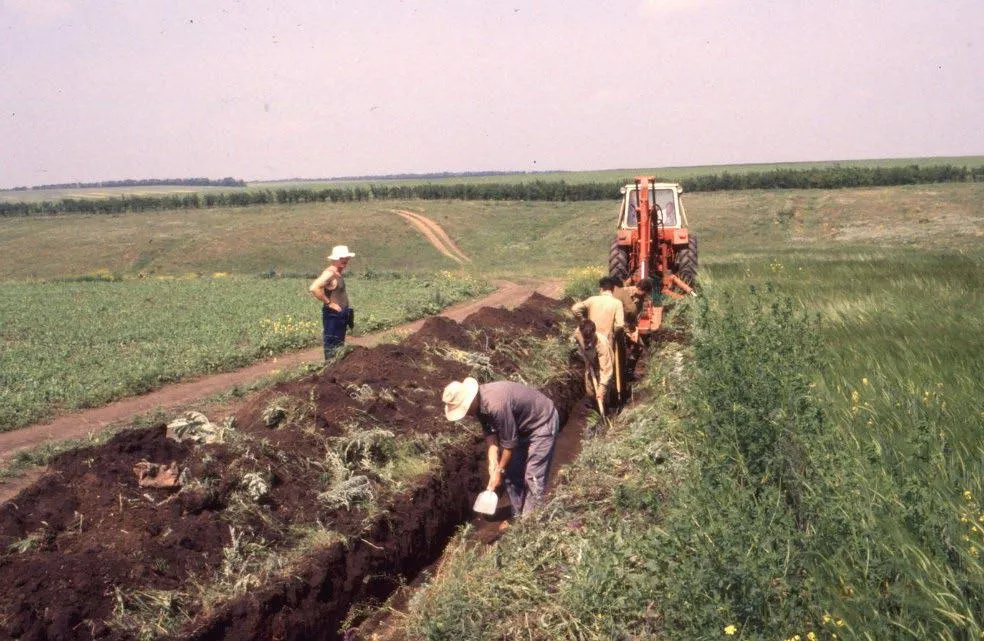
With nothing visible from the air, the team resorted to stratigraphic methods. The mechanical excavator was used to dig a long, narrow and shallow trench across the suspect area. As at Sernyky, they were looking for a discontinuity of deposits in the section.
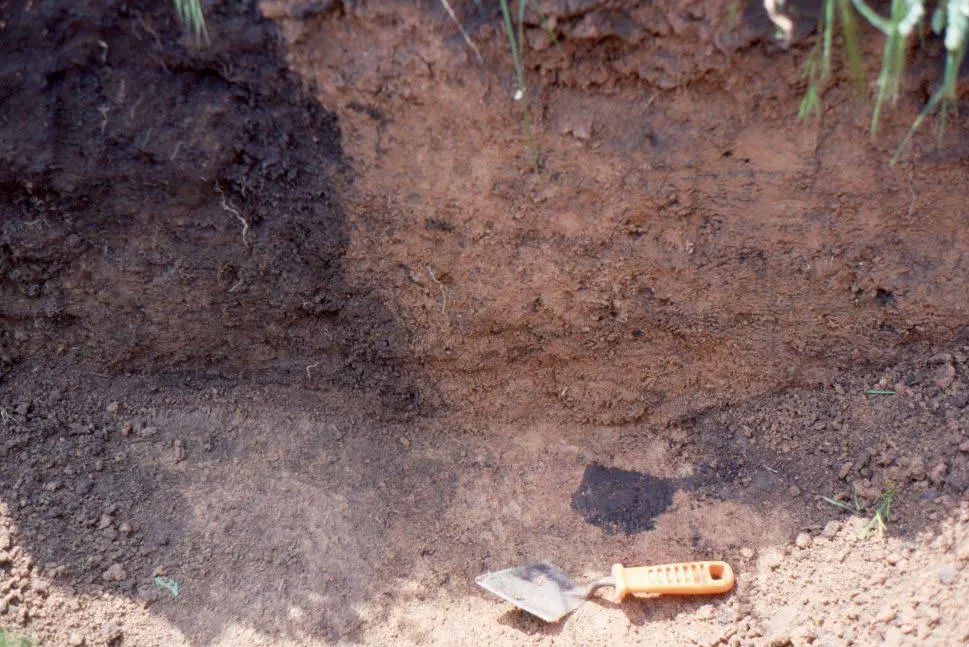
Visible is the discontinuity Richard Wright and his team were looking for. The surrounding plains are covered in windblown loess. On the left is the superficial black loessic clays of the surrounding plains – once red, but weathered to black over millennia, since deposition during the last glaciation. The black horizon lies over its original state of unweathered loess, which is bright red. Again there is a sloping cut into the loess. It represents, as at Sernyky, the edge of a hole dug into the loess from the current surface. The hole had then been refilled with what is mainly the red loess (indicating a deep hole) but with inclusions of the black loess. Note the large lump of black loess that lies within the red refilling.
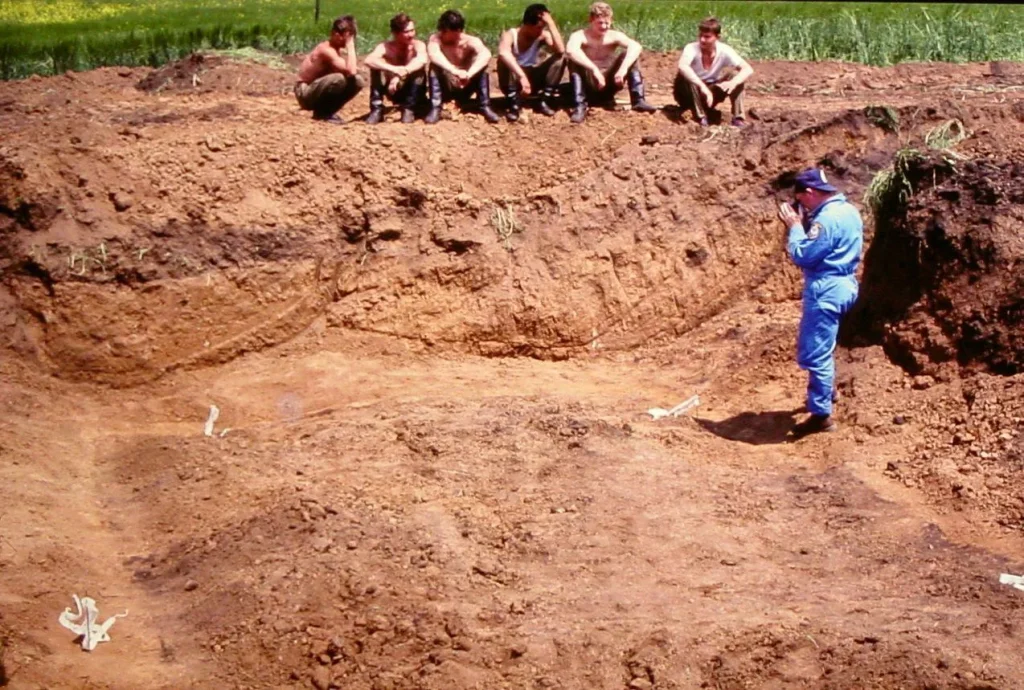
By following this discontinuity, and removing tons of loess, the outline of a roughly square grave is revealed – part of which is seen in the foreground. Soviet soldiers are having a rest.
Once excavation of the grave started, the first skeleton found was that of a lone child. The position of the forearms suggest it was thrown alive into the grave, face down. To protect itself it extended its arms, which on impact with the ground folded under the body. There is a bullet hole in the head, and the disposition of the body suggests that it was thrown into the grave and then shot. The disposition of the limbs looks too organised for the child to have been shot and then thrown, with limbs flailing, into the grave. Regardless of the sequence of events, the child appears to have been murdered. It is not in a personal grave and has been shot in the head.
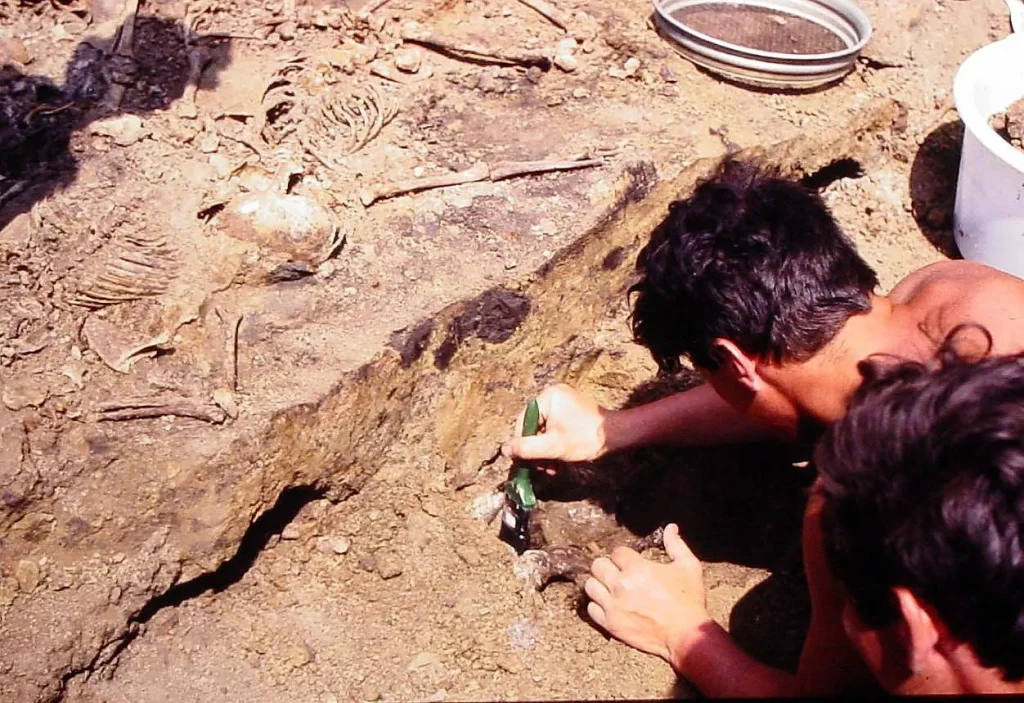
The disorganised bones of the children lie on a partial refilling of the grave. Note the lump of black loessic clay, that would have come from the superficial deposits of the field. A soldier is just uncovering bones of the adults, who were murdered first, the grave being partly filled before the children were murdered.
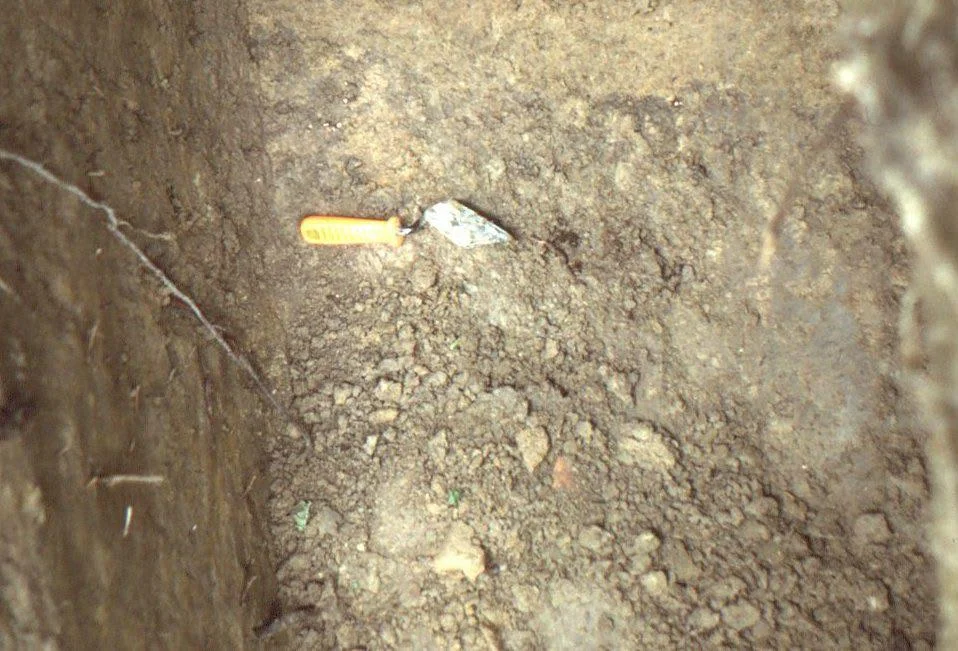
Finding the cutting of the mass grave at Hnivan was a problem. There was no black weathered top to the clay soil. Nevertheless, the edge was found by careful scraping near the surface. At the very top of the photo is a line. Undisturbed, solid clay, that was difficult to dig by hand occurs on the photo above that line. Mottled clay, easier to dig by hand, is below the trowel in the photo. It is the refilling of the grave.
(Photo supplied by Richard Wright)
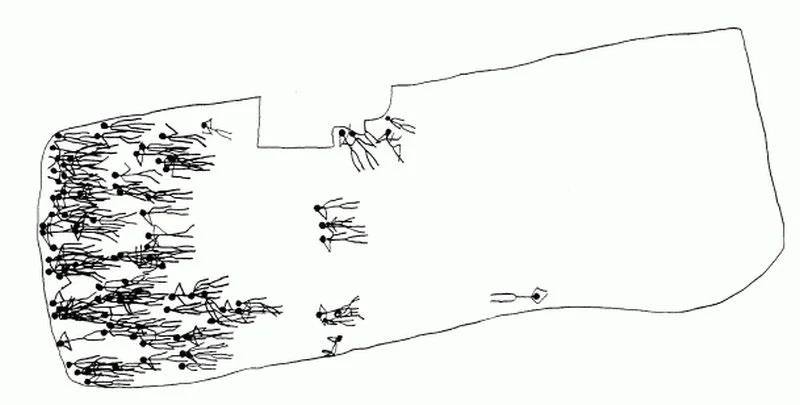
When Richard Wright’s team dug down they at first found no bodies. It was an exasperating two days. Then they found the skull of the first body. This plan shows the reason. In the right half of the grave there is only one body. This was the only one of the three graves from which the bodies were exhumed. This happened after the team left the site. It was done so that the bodies could be given respectful reburial in individual graves in the town cemetery.
Richard Wright recalls that at Hnivan the intention to exhume and rebury was instigated by a survivor of the murders, when he was a child. He followed, at a distance, the procession of those about to be murdered . The grave contained his relatives. He visited the forensic team each day, but would look into the grave only when the uncovering of bodies was finished. Then, looking into the grave he made a short speech. He said he would arrange for the bodies to be exhumed and reburied in the town cemetery. Then his neighbours would start believing what happened.
This website includes photographs, personal accounts and historical material that some visitors may find confronting. It is not recommended for those under 13 years of age. Please explore at your own pace and take time to reflect before you leave this website.