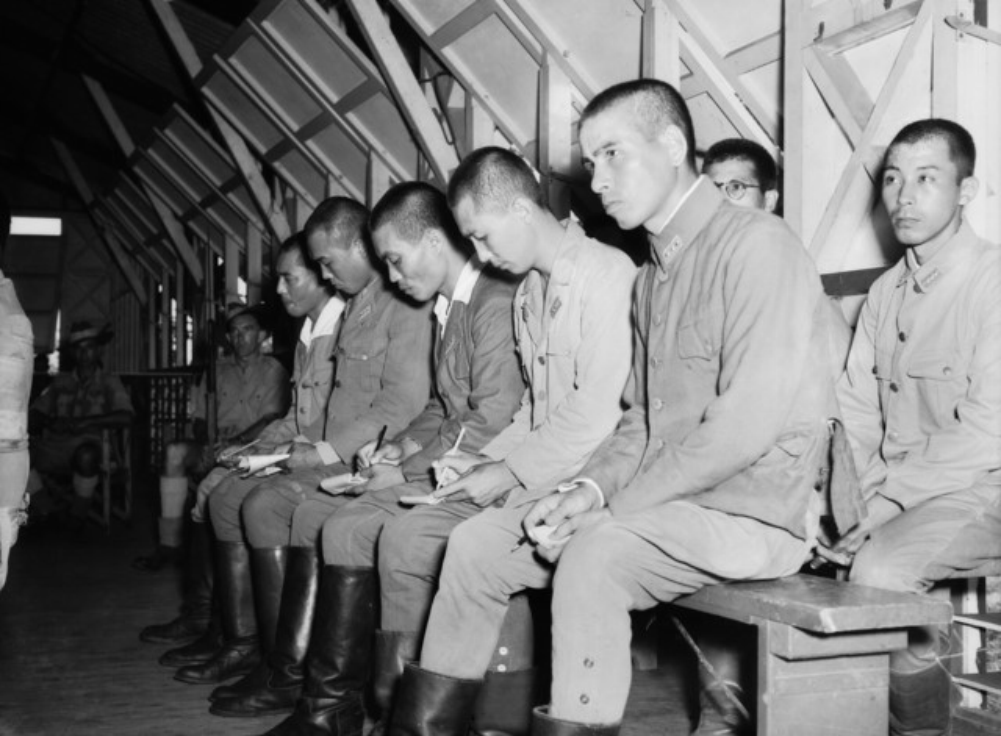
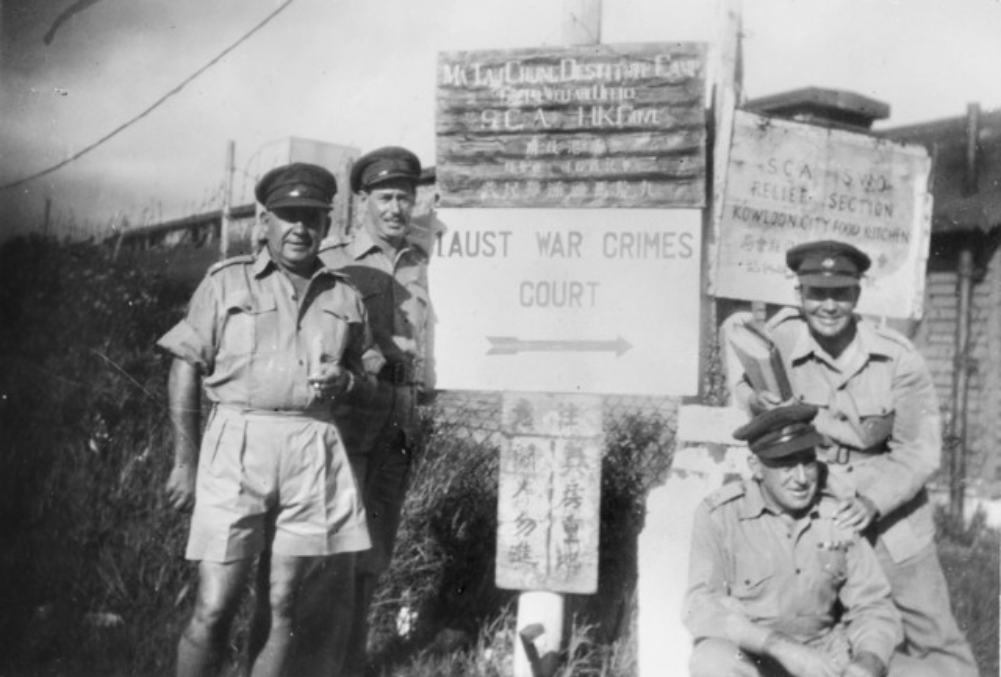
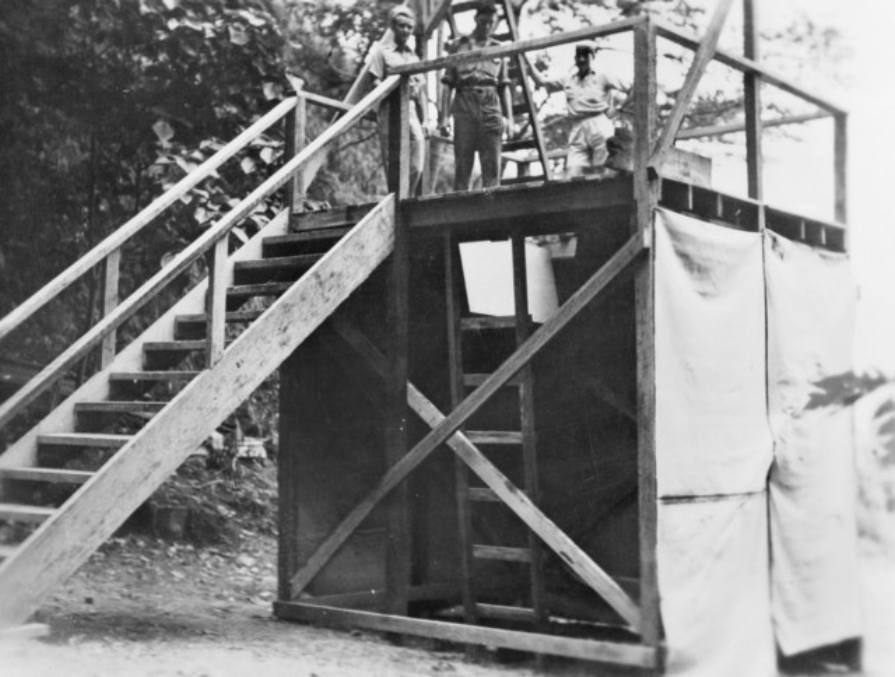
The War Crimes Act (1945) enabled the prosecution in military courts of Japanese defendants for crimes perpetrated primarily against Australian soldiers in World War II.
The Hawke governmentʼs War Crimes Amendment Act (1988) amended the earlier Act to allow the prosecution in Australian criminal courts of residents and citizens for ‘serious crimesʼ against civilians committed in Europe between 1 September 1939 and 8 May 1945. A ‘serious crimeʼ was defined by setting out crimes regarded as serious in Australia at the time of World War II, including murder, manslaughter and rape. To be considered a war crime, it had to have been committed during hostilities or occupation, in the course of political, racial or religious persecution, or with intent to destroy in whole or in part a national, ethnic, racial or religious group. Obeying superior orders was not a defence.
The federal government did not have its own criminal courts, so criminal offences would be tried before state judges in state courts. The standard of proof for conviction was ‘beyond a reasonable doubtʼ.
The legislation had its critics in and outside parliament. It was challenged in the High Court but survived.
Suspects charged under the legislation would have their cases considered in a committal hearing before a magistrate. In Adelaide there were three such committals. They had the character of trials, with defence and prosecution teams, witnesses, and the presentation of a wide range of evidence. The task of the magistrate was to make a finding as to whether there was ‘a case to answerʼ. If so, then the case would proceed to the Supreme Court and a trial before a jury.
Kelvyn Prescott became the first Australian magistrate to preside over a committal under the War Crimes Amendment Act (1988). His finding in the Polyukhovich case was that there was ‘a case to answerʼ on two counts; Polyukhovich was committed to stand trial in the Supreme Court.

Under the War Crimes Act (1945) trials were held before military courts in the period 1945 to 1951. Altogether 924 enemy nationals were prosecuted in 296 trials held in eight locations, including Darwin. The courts handed down 148 death sentences and 496 prison terms.
Former attorney general the late Lionel Bowen responds to a question from journalist David Bevan in 1991 about the option of extraditing alleged war criminals.
Audio: Bowen.4.Extradition
Source: Recording of interview with former attorney-general Lionel Bowen, May 1991. Interviewer: David Bevan. Private collection.
Dr. Richard Emanuel (Dick) Klugman served as the Australian Labor Party (ALP) member for Prospect in NSW from 1969 to 1990. Born in Vienna in 1924 and arriving in Australia as a Jewish refugee in 1938, Klugman was the first refugee elected to the Australian House of Representatives. His contribution to parliamentary debate on the proposed War Crimes Amendment Act was distinctive. Where many members expressed a fear that convictions might result from the provision of false evidence stemming from nefarious sources behind the Iron Curtain, Klugman feared that the passing of so much time since World War II might mean that guilty men would be acquitted. His views put him at odds with members of the ALP of the Jewish community, but they proved to be remarkably prescient.
Source: Hansard, 26 November 1987, 2791.
The Opposition has concentrated on the conviction of innocent persons on false evidence. My fear is that it will be extremely difficult to obtain a criminal conviction, in other words, to prove guilt beyond reasonable doubt. After 45 years it would not be difficult for any defence lawyer to create sufficient doubt. Honourable members who are old enough would agree that it would be very difficult to remember faces, considering the fact that they would have changed in appearance, and the sorts of details required in response to cross-examination after such a long time.
Therefore, the chances are that guilty persons would be acquitted unless they pleaded guilty, which they would be advised not to do. Their acquittal on the basis of doubt would be interpreted by many as indicating that they were not guilty and that the facts of the brutal killing of millions of people in Europe for political, religious or racial reasons were not as clearly proven soon after the war.
1943
The Moscow Declaration
The so-called ‘Moscow Declaration’ arising from the Moscow Conference of October 1943, included a ‘Statement on Atrocities’, signed by Roosevelt, Churchill and Stalin. It was agreed that ‘those German officers and men and members of the Nazi party who have been responsible for or have taken a consenting part in the above atrocities, massacres and executions will be sent back to the countries in which their abominable deeds were done in order that they may be judged and punished according to the laws of these liberated countries and of free governments which will be erected therein.’
The great majority or war criminals who entered Australia were not Germans or members of the Nazi Party (NSDAP) but had crimes as collaborators with German occupying forces.
The text can be accessed here:
https://avalon.law.yale.edu/wwii/moscow.asp#imtmoscow
1945
London Agreement
Without prejudicing the previous Moscow Declaration, the signatories to the London Agreement of 8 August 1945 agreed to establish ‘an International Military Tribunal for the trial of war criminals whose offenses have no particular geographical location whether they be accused individually or in their capacity as members of the organizations or groups or in both capacities’. This agreement led to the Nuremberg Trials.
The text can be accessed here:
https://avalon.law.yale.edu/imt/imtchart.asp
War Crimes Act 1945
https://www.legislation.gov.au/C1945A00048/asmade/text
War Crimes Amendment Act 1988
https://www.legislation.gov.au/C2004A03751/latest/text
Criminal Code Act 1995
Division 268—Genocide, crimes against humanity, war crimes and crimes against the administration of the justice of the International Criminal Court
https://www.legislation.gov.au/C2004A04868/2012-12-10/text/2
This website includes photographs, personal accounts and historical material that some visitors may find confronting. It is not recommended for those under 13 years of age. Please explore at your own pace and take time to reflect before you leave this website.